Beyond the Battle…
In Udaipur’s City Palace Museum is the grand oil painting on canvas titled ‘Depicting the Battle of Haldighati fought on 18th June 1576 CE between Maharana Pratap and the Mughal Forces of Akbar led by Kanwar Man Singh of Amber’.
The theft of royal jewels from the Louvre is more than an audacious crime. It is a warning about what happens when prestige eclipses prudence.




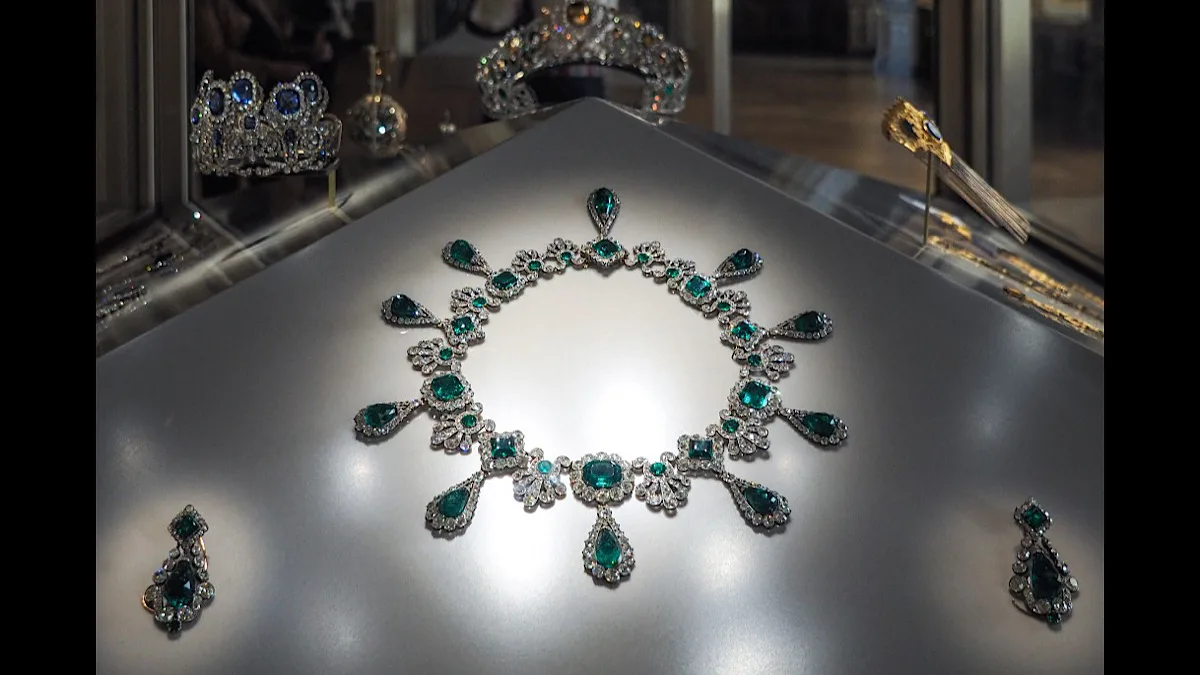
Photo:X
The theft of royal jewels from the Louvre is more than an audacious crime. It is a warning about what happens when prestige eclipses prudence. The world’s most visited museum, entrusted with guarding humanity’s treasures, now finds itself accused of neglecting the very duty that defines it. For years, the Louvre has dazzled the world with grand exhibitions, ambitious acquisitions, and visionary projects promising a “new Renaissance.”
Yet beneath the spectacle lay an unglamorous truth: its systems of protection and maintenance had been allowed to decay. While millions were spent acquiring new works and redesigning spaces, only a fraction went toward security and upkeep. The result was a perfect storm ~ priceless jewels exposed, safety protocols outdated, and complacency mistaken for confidence. The heist, executed in broad daylight, has become a symbol of misplaced priorities. It was not the work of a sophisticated global syndicate but of petty criminals exploiting institutional neglect. That makes the failure even more damning. The Louvre did not fall victim to superior cunning; it fell victim to its own inattention. The episode also challenges France’s cultural establishment to rethink how heritage institutions are funded and managed. When politics and prestige drive priorities, essential but invisible systems ~ security, maintenance, staff training ~ suffer.
Advertisement
The Louvre’s lapse, therefore, is not an isolated event but a reflection of broader systemic disregard for the mundane work that preserves greatness. This theft exposes a deeper malaise within cultural institutions: the belief that visibility equals vitality. In the race to modernise and impress, the Louvre forgot that its greatest achievement was never its expansion, it was its stewardship. A museum that cannot secure what it already holds undermines the very legitimacy of its ambition. There is also an ethical dimension to this neglect. The jewels that disappeared were not mere ornaments; they were fragments of Europe’s collective memory, objects that connect modern France to its imperial past. Losing them so carelessly is not just a material failure but a moral one. It suggests a shift in priorities, from guardianship to showmanship.
Advertisement
The Louvre’s much-publicised New Renaissance project, already burdened by rising costs and questionable feasibility, now stands as a cautionary symbol of overreach. No cultural vision, however bold, can justify underinvesting in the fundamentals. Without trust in its security and preservation, even the Louvre’s grandeur rings hollow. The museum’s leadership has promised reform and insists it has long-term plans to strengthen protection. That is necessary but not sufficient. What is truly required is a cultural reset, one that places preservation ahead of publicity, vigilance ahead of vanity. The jewels may one day be recovered. But the damage to the Louvre’s reputation will take far longer to restore. The world’s greatest museum now faces a simple truth: before it can lead a new renaissance, it must first relearn how to guard its own past.
Advertisement